
On-Grid Solar Systems
Grid-tied installations that offset your bill with net metering — the fastest and most cost-effective way to go solar for urban homes and businesses.

About this system
An on-grid (grid-tied) solar system works alongside your utility connection. Solar panels on your roof generate DC electricity, a grid-tie inverter converts it to AC, and the power is used by your loads first. Any surplus is exported to the grid through a bi-directional net meter, and you receive credit against future consumption. At night or on cloudy days, you simply draw from the grid — no batteries required.
Best use cases
- Urban and semi-urban homes with a reliable grid
- Schools, hospitals, and offices with daytime load
- Shops, showrooms, and small commercial units
- Housing societies with common-area consumption
- Factories running mostly during the day
How the system works
An overview of your installation from the customer's point of view. Flip the toggle to see how the system behaves during a grid outage.
Grid status
Flip the switch, then tap any to see what each component is doing.
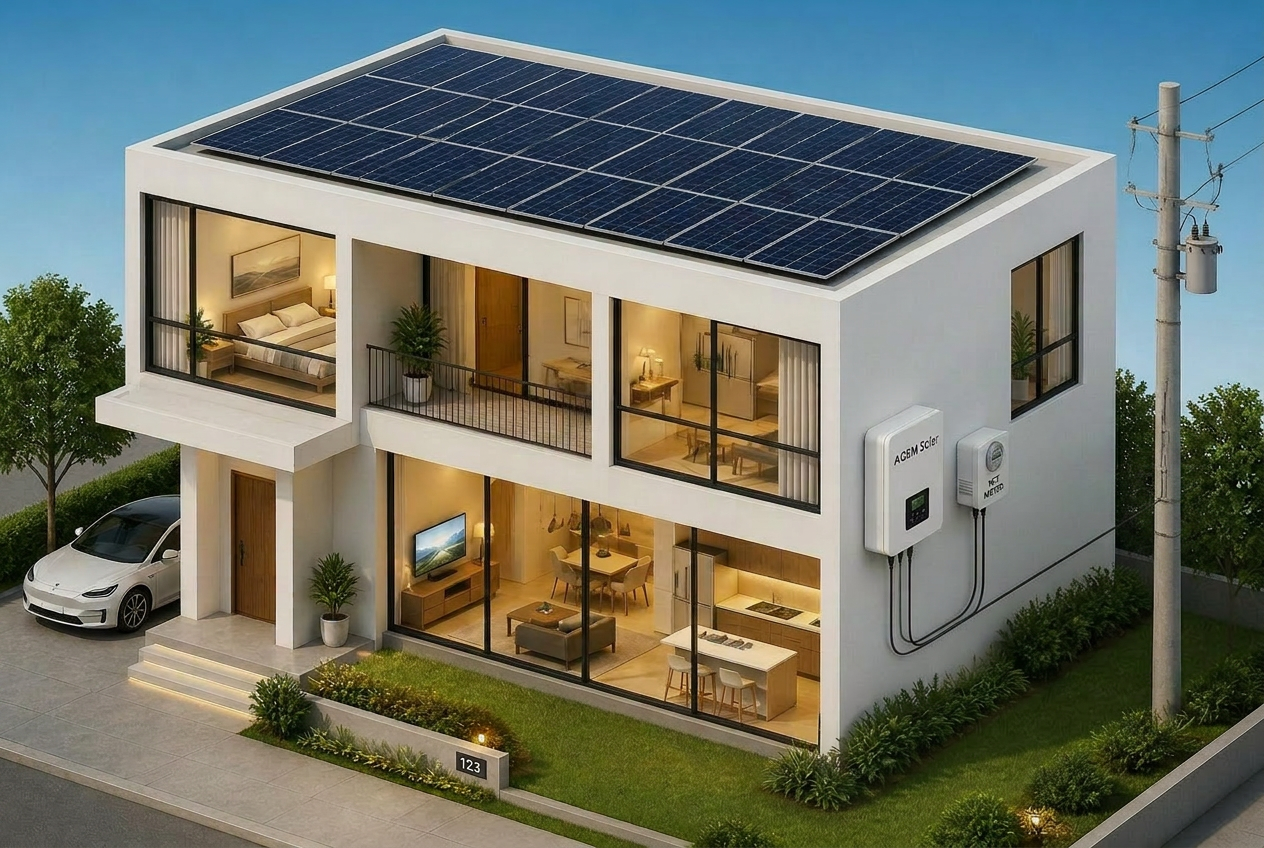
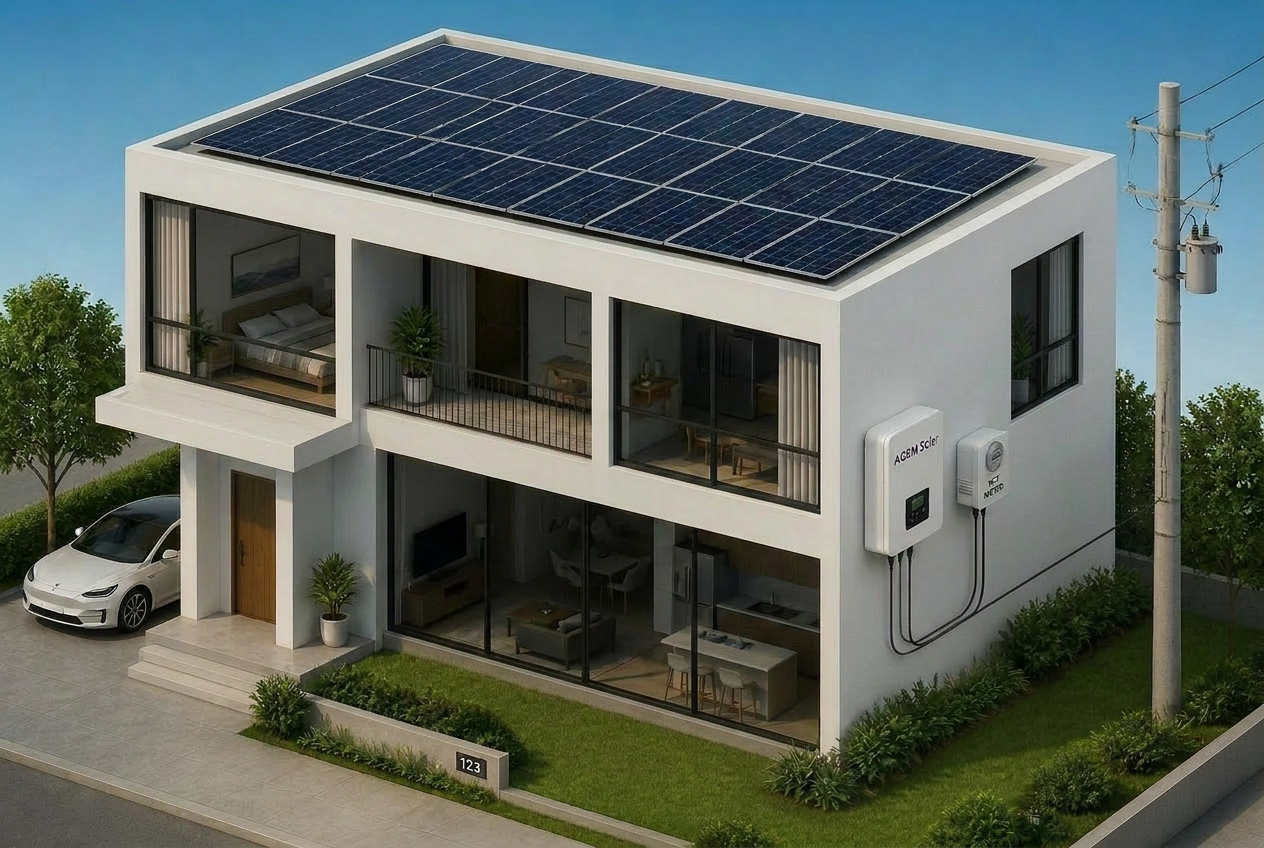
Grid on: your home draws solar first, and any surplus exports through the net meter.
Bill of materials (BOM)
The engineering breakdown — every major component we install and why. Click any card to expand.
Click any component () to learn what it does.
Requirements for this solution
- Shadow-free roof area (~100 sq ft per 1 kW)
- Structurally sound roof (RCC / metal / tiled)
- Sanctioned load / service connection with the DISCOM
- Feasibility for a bi-directional net meter
- South, south-east, or south-west orientation preferred
Key benefits
- Lowest upfront cost per kW
- Fastest payback — typically 3–5 years
- Net-metering credits reduce your bill by 80–95%
- No batteries: less maintenance, longer plant life
- Eligible for central and state subsidies
- 25-year panel performance warranty
Indian Government subsidy applicability
Subsidy amounts and eligibility depend on MNRE and state DISCOM guidelines and are revised from time to time. AGSM Solar handles the full paperwork on your behalf.
Ready to design your system?
Get a free site visit and a detailed BOM tailored to your rooftop.
Talk to an Engineer